




Department of Advanced Chef (2-year course) | Course and curriculum introduction | Osaka Cooking, Confectionery and Pastry Chef Vocational School

Department of Advanced Chef (2 years)

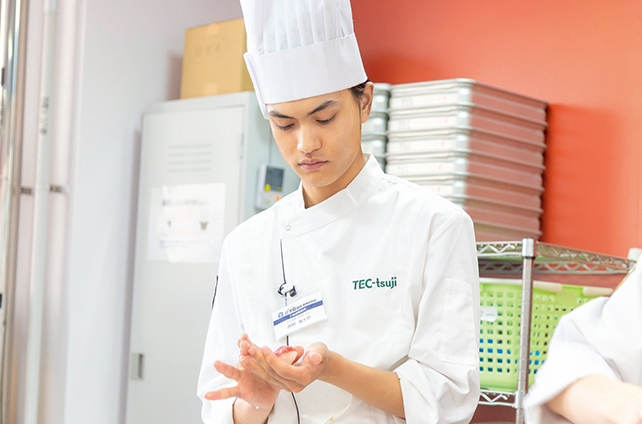
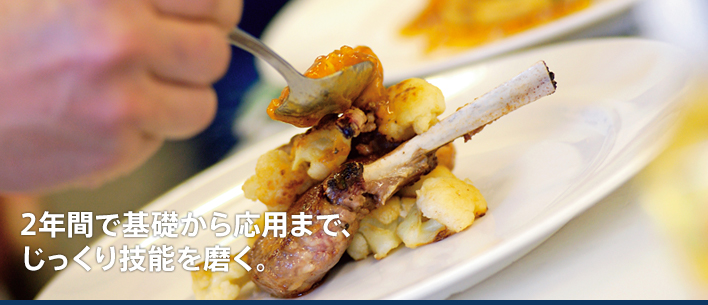
Over the course of two years, you will thoroughly hone your skills from basic to applied.

Department of Advanced Chef (2 years)

Students will learn about a wide range of food-related fields, including various cuisines, food and beverage service, and hygiene, and will develop a broad perspective and advanced cooking techniques as a chef. In the first year, students will master the basics of cooking in general, and in the second year, they will master their favorite cuisine in one of four courses of their choice: French/Italian cuisine, Japanese cuisine/sushi, Chinese/Asian cuisine, or creative/fusion cuisine, with the aim of becoming a specialist at a higher level.

  • Characteristics of Department of Advanced Chef
  • Two years of study
  • Qualifications you can acquire & major employment opportunities
  • Current Students' Comments

Characteristics of Department of Advanced Chef

Over the course of two years, students will hone their skills from basic to applied, aiming to become a top-class chef.

Special Classes
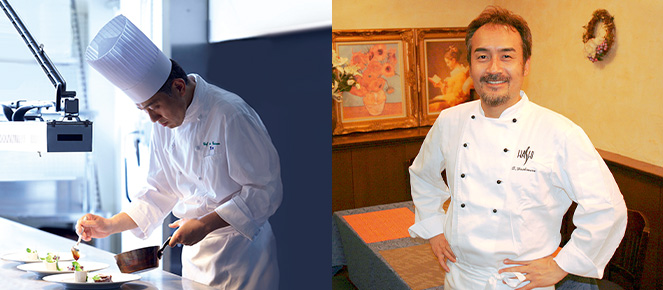
Special courses from top hotels and owner chefs

You will acquire the highly specialized knowledge and skills required in a professional setting. In addition to improving your cooking skills, you will also learn the know-how of restaurant operation and management.

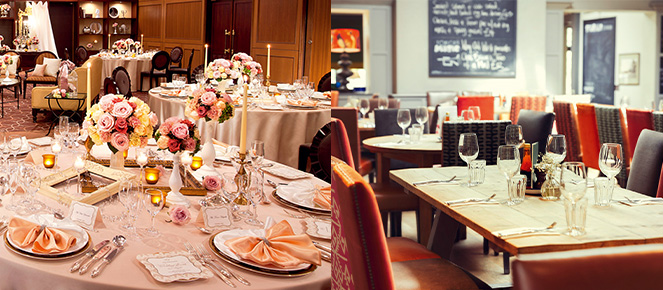
See, taste and feel on site!

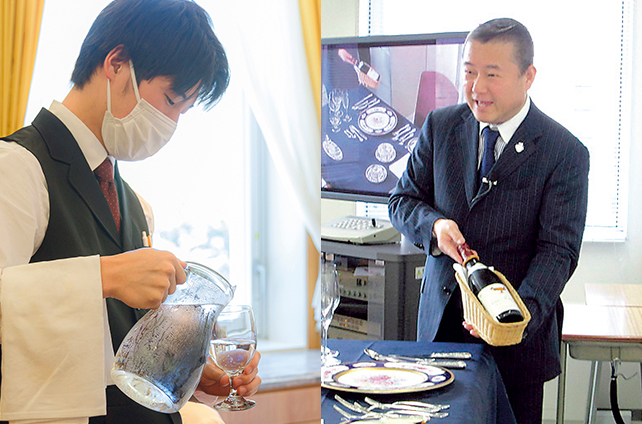
There will also be full-course tastings at restaurants run by professors who have given lectures at Tsuji Gakuen, as well as at first-class hotels, allowing you to learn a wide range of etiquette and the world of food.

Training precedents

●The Ritz-Carlton Osaka ●Grand Prince Hotel Osaka Bay ●InterContinental Hotel Osaka ●Hilton Osaka ●Imperial Hotel ●Hotel Okura Kyoto ●Hotel Okura Kobe ●Anniversaire Co., Ltd. ●Best Planning Co., Ltd. ●Senri Geihinkan ●Novarese Co., Ltd. ●Le Pont de Ciel ●Lumiere ●La Canro ●Nadaman ●Kitcho ●Nishimuraya ●Minokichi ●Chongqing Chinese Restaurant ●Totenkou ●Taiseikaku ●Horai

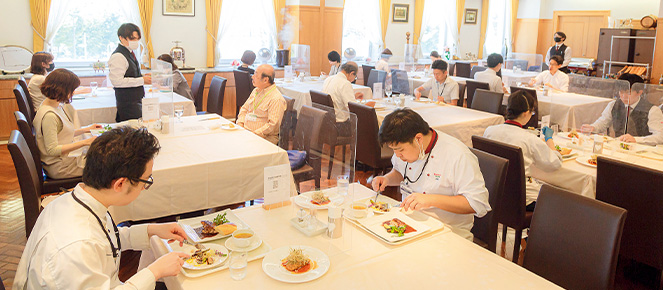
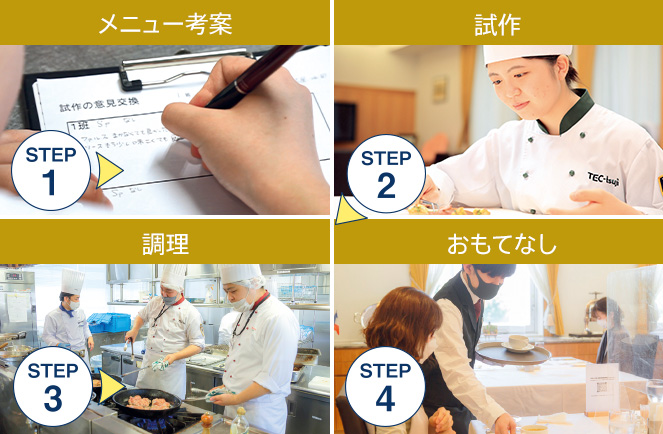
Restaurant training

In the second year, students are responsible for planning menus and calculating costs. First, each group creates and prepares a menu, then presents it to the class. The selected dish is served at the school restaurant.

Two years of study

1年次 食材に関する知識、調理器具の扱い方、調理方法など、プロの調理師に必要な基本知識・技術を料理全般にわたって習得。
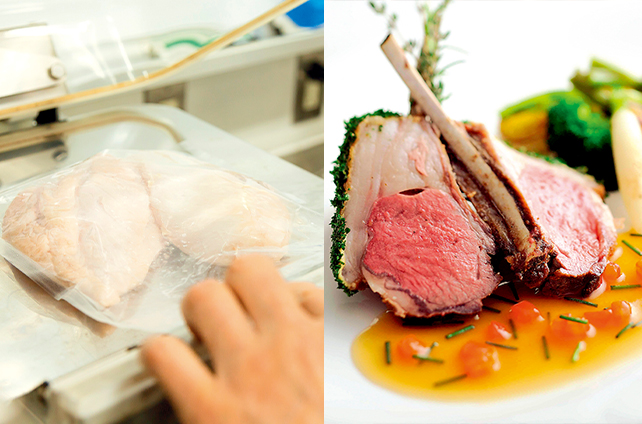
西洋料理(フランス・イタリア・スペイン)、日本料理、中国料理、新調理、サービスなど、総合的に基礎を学びます。

Learn the basics of five genres
~Improve your basic cooking skills~
  • Western cuisine
  • Japanese cuisine
  • Chinese cuisine
  • New Cooking
  • service

In the second year, students will strengthen their basic skills and improve their applied skills through elective course training, aiming to become a more sophisticated chef.

Choose from 4 courses- Master your favorite cuisine -
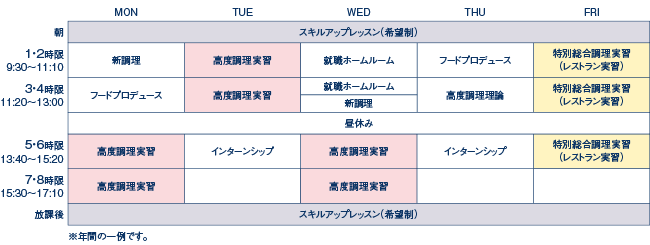
Example of second year timetable

Example of second year timetable

Qualifications you can acquire & major employment opportunities

Qualifications that can be acquired

  • Chef's license (national qualification)
  • Diploma (certified by the Ministry of Education, Culture, Sports, Science and Technology)
  • Fugu processing registration certificate and Fugu processing training completion certificate
  • Professional chef/Cooking technician theory exam exemption qualification
  • NPO Japan Food Education Instructor Level 3 and Level 2
  • Ministry of Health, Labor and Welfare certified restaurant service technician level 3
  • Food Technology Management Specialist
  • Business Ability Test Job Pass Level 3 and Level 2
  • Food 6th Industrialization Producer Lv.2

Main Employment Destinations

Western cuisine
  • French Restaurant
  • Italian Restaurant
  • Hotel/Western Cuisine Category
  • Spanish Restaurant
  • International cuisine (American, European)
  • Pension/Auberge
  • Others (Western restaurants, teppanyaki, steak, wine restaurants, dining bars, etc.)
Japanese cuisine
  • Japanese restaurants, traditional Japanese restaurants, specialty restaurants (sushi, tempura, noodles, hotpot dishes, fugu, eel, yakitori, etc.)
  • Cuisine inn, hotel/Japanese cuisine section, others (local cuisine, izakaya, etc.)
中国・
オリエンタル料理
  • Chinese restaurants (Cantonese, Beijing, Sichuan, Shanghai cuisine, Yum Sum, Dim Sum specialty restaurants, etc.)
  • Hotel/Chinese Cuisine Category
  • Oriental cuisine (Thai, Korean, etc.)
カフェ・
カフェレストラン
  • Cafe
  • Cafe Restaurant
  • Cafe bar, sandwich shop, etc.
Group meals
  • Hospital meals, school meals, and meals for social welfare facilities
  • Industrial catering (companies, government offices, schools, etc.)
料理教育・
企業関係ほか
  • Cooking schools, culinary schools, companies (product development department)
  • Meal Planner
  • Food coordinator, food stylist, food writer
  • Prepared food processing/delicatessen
  • Chain restaurant catering/corporate employee cafeteria

Current student VOICE

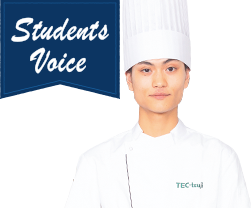
Students Voice

I chose Department of Advanced Chef because I wanted to gain solid skills before getting a job. Now that I'm in my first year, I want to hone my basics by cooking a wide range of different dishes, and in my second year I want to specialize in my favorite Western cuisine.

Department of Advanced Chef
Rentaro Nishioka
Graduated from Osaka Prefectural Sakuyakonohana High School


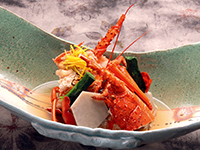
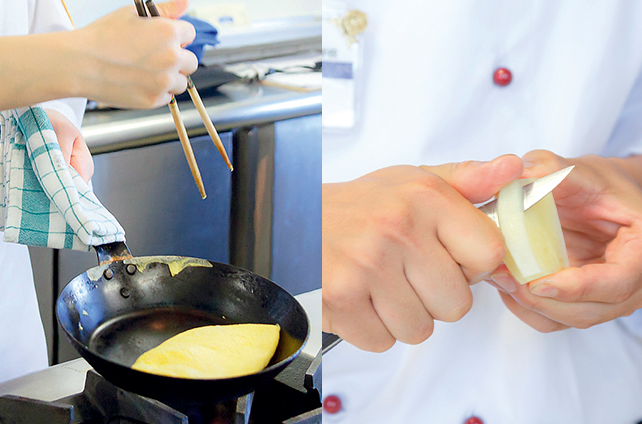
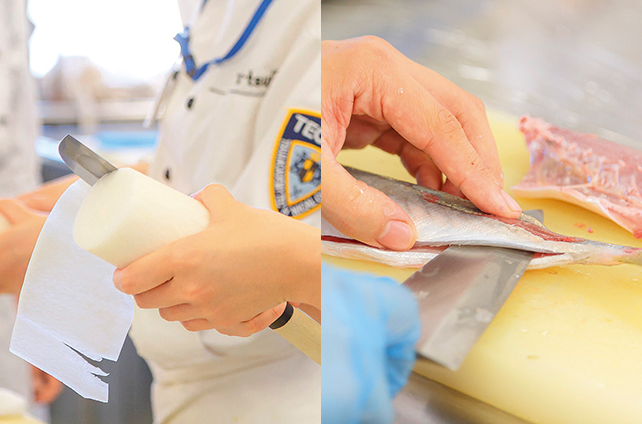
  • Japanese cuisine places importance on seasonality, and in the sushi class, we learned how to cut the ingredients and how to make the sushi.

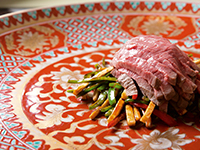
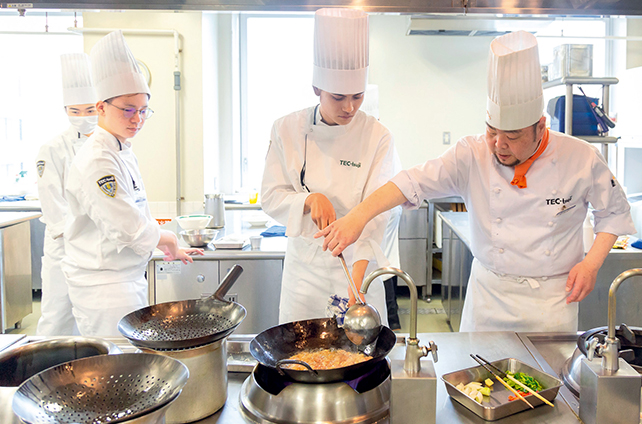
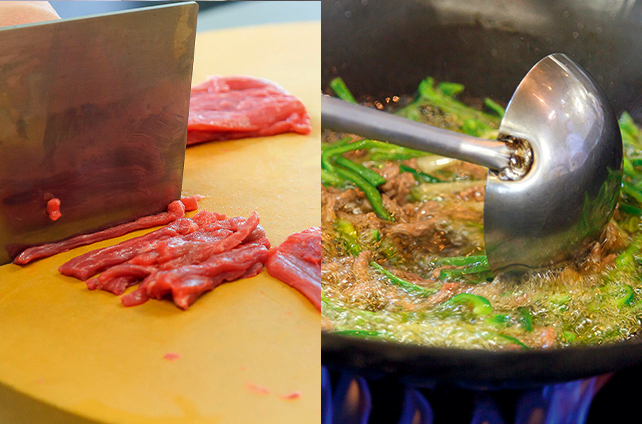
  • Chinese cuisine is prepared with a large wok and high heat, and I am also learning delicate carving and dim sum.

Top of page